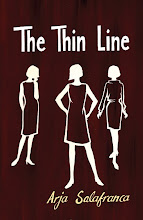
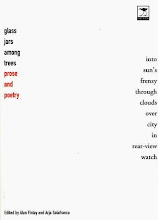
It focuses on a jazz musician and composer, Bantubonke, a man out of tune with fads. He is ageing, his cherished wife is living away from him in France, studying for a degree. Bantubonke has suffered an injury to his mouth — which means he can no longer play as he once could. Read more ...
Showing posts with label review. Show all posts
Sunday, March 31, 2019
Tuesday, April 4, 2017
"Their kiss tasted like sadness”
The General’s Women: a novel
by Susan Wittig Albert
"She would forever remember that moment
as the point at which her old life ended and a new life began. If I survive,
she thought, I will be different. I will know, always, that I am a part of
something larger than myself."
The story is astonishing. The General’s Women tells the story of
the love affair between General Dwight Eisenhower and a former model and now
driver, Kay Summersby during the Second World War. At this point he had been
married to Mamie for twenty-five years – years in which they had had two
children, and lost one of their young sons to illness. Kay is married but
separated, and engaged to be married to another man when she comes to work for
Ike when he is stationed in London, directing military operations. Wittig Albert’s
astoundingly readable novel imagines that affair – from London to North Africa
and back to England.
Told mostly from Kay’s point of view,
there are still sections devoted to the thoughts and lives of both Ike, and
Mamie.
Mamie is in in Washington for the duration
of the war, isolated, away from her husband and the frontline. And it’s Mamie
who comes off badly – her portrayal, while sympathetically painted – means she
comes across as a cossetted, spoiled army wife, more interested in unpacking
her china than in understanding the politics of the war raging across the
ocean. The world of jealous army wives is fascinatingly portrayed – wives
jealous of the rankings of their friends’ husbands, and wives who revel in
gossip and in repeating such gossip under the guise of being sympathetic. And Mamie
hears the gossip, is sickened by it and can do no more than smile through it. You
feel somewhat sorry for her.
But set against the strong, brave Kay, driving in
war-darkened London, through the infamous pea soup fogs and then in the
frontline in North Africa – Mamie comes off badly. No wonder, you think, Ike
would have preferred the resilient Kay to his delicate, neurotic wife. And when
she reveals how far she may have gone to save her marriage, the dislike is compounded.
![]() |
| Author Susan Wittig Albert |
Ike, the historical figure, is humanised
here. A man confident when plotting war tactics, less so when declaring his
feelings for another, or even admitting
those feelings to himself. Kay and Ike’s romance is portrayed against the
violence of war, snatched, secret moments are all they have; their time is limited,
in more ways than one. Nevertheless the affair is rendered beautifully – as two
people fall in love against the odds, against perceived wisdom, despite his
marriage and growing fame, and despite their age gaps. Kay was in her thirties when
the affair began, Ike his early fifties.
Wittig Albert writes of
their togetherness: “Still, as she drifted off to sleep with Ike fitted closely
against her— the two of them breathing together, their hearts, she thought,
beating together— she knew that a line had somehow been crossed. Her last
thought as sleep came was her mother’s word: dangerous. Yes, it was, she
thought, yes.”
The story is compellingly told – and as
always, Wittig’s historical fiction is gripping, fascinating, enjoyably so. The
novel wears its research lightly and convincingly. Her research is based Kay’s
memoirs, Ike’s letters, fellow officers’ wartime diaries, and newspaper
archives. Wittig evokes deprived war-time London with an authenticity that is
remarkable, and contrasts it against the harshly lit North African scenes and
the claustrophobic Washington apartment scenes.
Of course this is fiction – but as you read
on, astonished, you can’t help wondering where the truth lies. To this end
Wittig includes an author note at the end, explaining some of her sources and
reasoning, and is as fascinating to read as the novel.
There’s no spoiler in saying that of
course Ike left Kay – we all know he went on to win the Presidential election
in 1952 and had his wife Mamie at his side, not another woman. This novel
forces us to ask who are the winners, who are the losers, and at what price
does power come? If Ike had divorced Mamie in the conservative 1940s the
scandal of his affair and other political machinations would surely have put paid to
his political ambitions.
It also forces us to look at the real
sadness that results when people put ambition, duty, fear of the consequences or
the lust for power above and beyond their own feelings. Was Ike being inauthentic to his true self? Did he stay with Mamie
because he knew he’d be ruined professionally if he didn’t?
In the end Kay comes across as both a
warm, loving woman unwittingly falling in love with a man so charismatic and
powerful that she couldn’t help herself, despite her own engagement to another,
and we’re reminded through her story that love happens. Despite ourselves, love
happens, even when it seems foolish and stupid to let it. But Kay’s story is
ultimately a sad one – by loving all and risking everything, she also lost so
much too. And the poignancy of that pervades the end of this novel.
You’re left with the questions: did Ike really want to divorce Mamie and marry
Kay? You be the judge in the excellent,
highly recommended The General’s Women.
Tuesday, December 29, 2015
The Last Train to Zona Verde by Paul Theroux
Paul Theroux,
starting in Cape Town and only taking land transport, makes his way through
Namibia and into Angola, a place not known for its travel hot spots. He offers
a compelling, and starkly realistic portrait of this part of the world - from
its small, hopeless towns, ringed by poor slums and townships, to decaying,
corrupt cities such as Luanda. He probes the meaning of slum tourism in Cape
Town - where busloads of tourists pour into the townships, gawking at the poor
who live there – presenting both sides of the debate.
He writes: “This
sort of tourism has been denounced as ‘poverty porn’ and exploitation,
monetising the misery of slum dwellers who had nothing else to offer. For some
day-trippers, the experience was an extreme example of curiosity bordering on
voyeurism, the leering intention of the alien tourist to feel the shiver of difference,
the horror interest that was indistinguishable from slumming. But there were
others - sympathetic, charity-minded outsiders - who were moved to contribute
money as well as to gape, and having seen the slum they were contributing with
a degree of understanding.”
Taking local
transport, such as decrepit 4x4 taxi
that breaks down in the Angolan bush, Theroux is right in the heart of
nowhere, offered a glimpse of life there. Chewing on a piece of leathery,
inedible chicken baptised by clouds of flies, he takes out his notebook,
curiosity intact to ask what the drums in the distance symbolises. It turns out
the young girls in the village are undergoing an initiation of sorts.
Earlier on the
narrative he meets up with the San-speaking “real people” in far east Namibia,
the Ju/’hoansi, a people caught between two worlds, that of the ancient
hunting-gathering world and this modern world and finds them hurtling into the
present, donning T-shirts and embracing the now, skins only put on for the display
of tourists and curious travellers such as Theroux.
He writes: “They
observe the seasons ... years have no meaning, history has no meaning; the past
is simply gone and largely unremembered. ...
![]() |
| Paul Theroux |
Leaving them he observes
the duality and the Western longing to return to ancient times through our
image of these people: “The image of the Ju/’hoansi we cling to – I did anyway –
is that of a wild-dwelling, self-sufficient people. We seem to need them to be
that way, not merely different from us, and purer, but more different than they
really are – tenacious, resourceful, generous, peaceful as if inhabiting Eden. They
are reminders of who we once were, our ancient better selves. At one time, long
ago, all of us were foragers on earth. What a relief it is in a world yearning
for authenticity to know that though we have blighted our habitat, there is an unspoiled
place on planet, and a people who have defied modernity by clinging to their
old ways. The past recaptured. Isn’t it pretty to think so?”
He visits Windhoek,
a clean orderly city, but like so many in Africa, ringed by poverty in the form
of slums. He visits a game lodge, rides elephants in the Okavango Delta, ponders
the ethics of this, and visits Etosha, home of the mass tourist in Africa, here
to see the game and believing they have found the real deal. Which, as he
points out, they haven’t.
Finally arriving in
Luanda after a spell in the smaller city of Benguela, he alights from his
rickety transport in the suburb of Benfica, “a district of heavy traffic and ugly
buildings, stinking of dust and diesel fumes”. He witnesses the crash of a
small car, a driver emerging with bloodied hands and face, “bystanders laughed.
The bloody-faced man staggered, his arms limp, his mouth agape, like a zombie
released from a coffin. He was barefoot. No one went to his aid. He dropped to
his knees and howled.
“Idiota,’ a man next to me said and spat
in the dust.”
His entry into
Angola’s capital city is a harshly true portrait of the heartlessness that some
cities sear into their people, and cities are not where he wants to be, he
concludes. Luanda lives on the proceeds of its oil-rich reserves – but little of
that wealth reaches the majority of its citizens.
And it is here that
Theroux’s journey will end – disheartened by the grinding poverty and the dust
of corruption that sees a culture of bribery rise up and batter its people into
submission; he acknowledges that there is no more left to see.
The Last Train to Zona Verde is powerful portrait
of a part of Africa.
.
Thursday, January 8, 2015
The Road of Excess by Ingrid Winterbach
![]() |
| The Road of Excess never quite gains the ground or follows the momentum of the previous Winterbach novels I've read in English |
This is vintage Ingrid Winterbach, who writes in Afrikaans, and is one of our most startling and original writers. Translated by Leon de Kock into English, this novel first appeared in 2011 under the title Die benederyk, when it took the 2011 M-Net Prize.
Winterbach’s voice is dry, at times verging on sardonic, and her novels are deceptively layered. They seem simple and straight-forward at first, the storylines following a seemingly simple arc, but it’s what beneath that counts. Four years after first encountering the stories in the English version of To Hell with Cronje, I’m still reeling after encountering the parched physical and emotional landscape of scarred and barely recovering Boer War soldiers as recounted in that story. In The Elusive Moth, I followed the story of Karolina Ferreira, an entomologist, in the equally dry landscape of a small Free State town. Winterbach pulls you, puzzled at first, and leads you out, profoundly moved by the experience.
Unfortunately though, and to my disappointment, The Road of Excess never quite gains the ground, or follows the momentum of the previous Winterbach novels I’ve read in English. There are moments of wit and drama, and a characterisation of a neighbour, Bubbles Bothma, that are high art, but essentially the novel remained flat for me.
The Road of Excess tells the story of ageing artist, Aaron Adendorff, a widower, and lover of solitude, who finds his fortunes waning. His gallerist, Eddie Knuvelder, has promised him another exhibition, but the man has disappeared, leaving his two assistants fending him off and saying there are no plans for a future exhibition. Aaron feels adrift, cut off. Add to that that he asked to drive two up and coming artists to the Midlands, bored and cynical, they are nevertheless the one raking in the money and the publicity, getting to go to an important Berlin exhibition, a chance now denied him. No wonder Aaron’s mood is sour and disgruntled.
The novel is also peopled by a rich description of two other female characters, his domestic worker, the Sesotho Gloria Sekete, a woman who cleans for him, interrupts his day with her singing, and nasty habits like not using a cutting board to cut bread, splayed out in the kitchen, an inscrutable presence. Nevertheless, she serves as goalkeeper to the solitude he needs to create – keeping unwanted visitors to the door firmly away. Not that there are many.
Until the neighbour, Bubbles Bothma moves in with her frumpy dress sense, a need for lifts, and a way of insinuating herself into his life. Before long he’s giving her lifts, finding himself driving away from some fishy drama that is never explained and, surprisingly, discussing literature with her. Bubbles, with her badly dyed hair job and her companion, never quite gives up her secrets, staying away for weeks, returning with her demands for a lift. Bubbles lifts the novel out of a moroseness that has settled on the main character, Aaron, and she remains a tour de force of characterisation, even if we never quite find out all we want to about her.
"The name of the game is money, my friend. Where there’s art, there you’ll find the spirit of the times... The prices are way, way out. Astronomical. ...And anything goes. Art’s no longer alternative. Anything can be justified.”
And then, along with Aaron’s self doubt and feeling as if he has been left out in the cold by the artistic world, there’s his brother, troubled soul, Stefaans, a recovering addict. The novel is peppered with Stefaan’s SMSes to his brother – poem-like message filled with family history. Stefaans recounts incidents in their childhood, people they knew, his own life, and those that have populated it – leading Aaron into his own memories of the childhood he shared with his brother.
![]() |
| South African novelist Ingrid Winterbach, one of SA's most startling and original writers |
No doubt this is a rich, detailed novel, despite the scarcity of characters – those that exist are strongly drawn, and memorable. The narrative swirls with Aaron’s art, his preoccupations – with death for instance, and a desire not politicise it by commenting on events but to go deeper, paint more personal themes. Art is what feeds his soul he tells the inscrutable Mrs Sekete, and she disagrees.
And yet his obsessions with the absence of colour – using only white, black and red, with some green or orange point to his own soulful aridity. He wants to paint the hand of God, he says, and imagines it coming out of the canvas.
These descriptions are both vivid and profoundly fascinating to read – the artist at work is always a source of interest. Poking fun at the sometime pretentiousness of the art world too is rendered in a sidelong glance. One of the pretentious young artists Aaron escorts to the Midlands says, in the full arrogance of youth, “The name of the game is money, my friend. Where there’s art, there you’ll find the spirit of the times... The prices are way, way out. Astronomical. ...And anything goes. Art’s no longer alternative. Anything can be justified.”
Ultimately, it’s Aaron’s moroseness, his depressed character that must see us through this book of oddball characters, discussions of art, and a reaching into memory, and that’s its failing. You try to warm to him, but he remains perennially cold, just out of reach. There’s a lot to commend the story, and Winterbach’s at the height of her craft, if only there were some redeeming features in the figure of Aaron, some way of likinghim, even slightly, to feeling empathy for him. But instead, he pushes you away, which means this book moves along, certainly, but never flies off the page or leave you pondering, and moved long after the initial reading.
First published in the Pretoria News, September 22 2014
Subscribe to:
Posts (Atom)