Showing posts with label poetry. Show all posts

Tuesday, April 9, 2019

Reg Rumney reviews Beyond Touch


I can think of no greater compliment to a poet than to say that you have read all the poems in a volume. Often, I dip into poetry books, reading some poems that look promising, or which particularly resonate, and pass over the rest. I read all of the poems in ‘Beyond Touch’ by Arja Salafranca.


Read more ...

Monday, May 25, 2015

Salad Anniversary by Machi Tawara

Machi Tawara's first book of fifteen poems, Salad Anniversary was first published in 1987 in Japan where, remarkably for a poetry book, it sold over two million copies. In this slim, but delightful volume, she combines the classical ‘tanka’ Japanese form of short poetry, consisting of 30 tone syllables in a 5-7-5-7-7 pattern) to document a doomed love affair.

The poetry is sensuously beautiful, yet pared down, the language deceptively simple, yet talking in unsentimental tones about the beginning and the ending of love.

In August Morning the narrator is with her lover: “You and I on a night beach face to face in silence – a sparkler softy sputters. /Breaking your hesitation, I watch you hunt for words to break the silence/Your left hand/exploring my fingers one by one – maybe this is love.” Or is it? Later on in the same poem, the narrator says simply: “Now that I wait for you no more, sunny Saturdays and rainy Tuesdays are all the same to me.” 

Longing suffuses these poems, moments are briefly captured as in the title poem Salad Anniversary: “Folding towels,/I wrap the smell of the sun – /perhaps one day I too shall be a mother.”
The love affair continues in Baseball Game, but the signs are there: “You have your future, I mine, and so we take no snapshots”, and later in the same poem, “Cooking an omelette/flavoured with tears/of coming morning and farewell.”

This achingly beautiful set of poems is accompanied by an afterward by the translator Juliet Winters Carpenter. Highly recommended.  
 .  

Sunday, May 3, 2015

PEN SA’s Q&A with Arja Salafranca

Favourite South African novel / poem?
I don’t have a particular favourite South African poem or novel and that does change with every new book read – but I do enjoy novels by South African novelists such as Damon Galgut and Ingrid Winterbach, for instance. I’m looking very forward to reading Craig Higginson’s just published The Dream House, andFinuala Dowling’s The Fetch... Read more.

Sunday, November 13, 2011

Six poems on Peony Moon

Arja’s first poem was written at the age of ten – and detailed the grim effects of typhoid, a subject she knew nothing about. Things have changed since then. Her first poetry collection, A Life Stripped of Illusions, won the 1994 Sanlam Award, her second collection is The Fire in which we burn, while Isis X (Botsotso) contains a mini collection....Read more here

Saturday, August 13, 2011

Poetry: South African women writing their bodies - Gillian Schutte

There has been a proliferation of poetry coming out of South Africa over the past few years – and much of this poetry has been scribed by women writing their bodies. From the wants and needs of their vaginas to the conflicting emotions that a period may bring on, to the inner stirrings of desire and lust – women are writing it all down and lots of it is getting published.

Says award-winning poet Arja Salafranca: “I think some of this has been due to the really sterling efforts of Colleen Higgs at Modjaji Books – she’s putting out a record number of poetry volumes by women writers – more so than any other publisher. This creates awareness and interest in the form.” ...Read more here

Friday, August 12, 2011

An apple in Munich

I think a red apple won’t be good enough.
A red apple plucked from a bowl on a luxury
river cruise liner, carried in my bag for two days.
An apple cratered on board in Passau,
placed in the industrial deep freeze and displayed
five days later in a white china bowl somewhere in rural
          Hungary.
And then plucked by me, craving fresh fruit
after days of rich six-course meals.

But it languishes in the bowl in my cabin.
Until, packed, looking around, I grab it,
stuff it in my travel bag.
You never know when you’ll get hungry at airports,
said an elderly woman on board.
We fly from Budapest to Munich.
Catch a train to the city centre.
It’s a cool spring, but the city streets, flanked by
history and beggars, are still full of strolling Germans.

It won’t be good enough, will he take it?
I ask the Scotsman with me. Surely he’d prefer money?
But the Scotsman takes it, gives it to the beggar
huddled in a doorway and without hesitation
the beggar, not even looking up, bites hungrily
into the fruit, devouring it quickly, desperately,
without words of debate.

Published on LitNet

Thursday, August 4, 2011

Joburg pix, not taken

A man, having his head shaved,
highlighted by the dusk of early evening.
All around him, gathering darkness, except his head,
this small stall, lit by phosphorescence,
haloed by a weird greenish purple light.
A flash of colour.
I drive on.

Another man, lurching across the road.
Perhaps forty, mouth already gummy,
long brown hair scraggly,
head shakes, words spill out,
but they mean nothing.
I let him pass, a smile of gratitude,
before he reverts back.

A woman, whose breasts are wide and flat,
fat bulges under her cheap beige knit.
She strolls, slatternly, slowly,
I must wait, gunning my engine.

The man who puts his hand through my window.
Takes hold of my keys: Give me money now.
No, I say, surprised. No, again. I won’t give you my keys.
Eyes darting, afraid, he runs away.
No, I carry on, although no one can hear me.
Money in the boot, not much.
I don’t carry much these days.
Money, along with camera,
tucked away in the boot,
where they can hurt nobody.

Published on LitNet

Tuesday, January 18, 2011

What's Missing, what's found

Missing by Beverly Rycroft
(Modjaji Books, R145)

I picked up Beverly Rycroft's debut collection of poetry, Missing, while waiting for a flight home. Airports are never a good time to read - announcements shatter your concentration repeatedly.
But, from the first poem, I was drawn in and found myself devouring these poems hungrily. Rycroft takes the intimate nature of her life and shapes the experience into deeply-crafted works.

Much of the poetry in this collection is concerned with her struggle with breast cancer, a seemingly grim topic, but don't let that put you off. Her poems are heartfelt and you don't have to be a woman, or to have suffered breast cancer, to have these poems talk to you.

The subject in Friday: Diagnosis is cancer, and the words are transformed into sharp, shocking weapons: The telephone, once a domestic creature/has turned into a raptor/? The Doctor's voice spinning from it/ steamed warm/and sticky as fresh entrails:/malignancy/ chemotherapy.

And yet there is humour, too, in Rycroft's examination of the disease. Here, in David's Visit David tells her that: in his Aunt's day/breast prosthetics were bolstered/with bird seed./After a sweaty game of tennis/one afternoon/she found/her bosom had begun to sprout.

The equally intimate nature of love, marriage, togetherness, and the delights of having and watching children grow up, is another topic explored compellingly in these poems.

These themes coalesce in the poem, If this bed could talk, in which the narrator speaks of a bed which has hosted love "lying together", a youngest child who has colonised the bed, a mother-in-law urging a husband to eat, a daughter singing, and a woman waiting.

Meanwhile, in What I learned from you the poet writes of a marriage in which she learns that: a brown Gomma-Gomma bedroom suite/isn't the worst way to start a marriage. But what she learns is also bittersweet, that in the end: if we really had to/you and I might/just/manage without each other. And then, gratitude for life: "laughter/good friends/my love/ this poem is the heart of an achingly simple poem: Bequest.

Rycroft's poetry is very accessible, vital and necessary: a fine debut.

Published The Star Tonight, October 7 2010

Saturday, January 15, 2011

Winter afternoons

Winter afternoons the pink wall is
cold grey, the sun oblique, hiding,
you can feel the chill in the
shadows of the paint.
Even the leaves look cold.

Published in New Contrast, Summer 2010

Saturday, October 16, 2010

The fire in which we burn is now available as a free ebook


My second collection of poems, The fire in which we burn, published by Dye Hard Press in 2000 and now out of print, is available as a free ebook here

Wednesday, July 14, 2010

Invite to the first Jozi WordJam - Friday 23rd July

Featuring four poets
& open mic

Join us every 3rd Friday for an evening of great food and wine and the spoken word.

Friday 23rd July - 7pm (R20 cover charge)

Gail Dendy was first published by Harold Pinter in 1993, and her six collections of poetry have appeared variously in SA, the UK and USA. She is an internationally trained dancer, and helped pioneer Contemporary Dance in SA between the late 1970s and the early ‘90s. Other passions are environmental- and animal-rights issues. She lives in Johannesburg together with family, pets, a law library, and a huge collection of Rock ’n Roll.

Marcia Nonkululeko Tladi is a writer of poetry and prose. Her poetry is collected in Timbila journal and in Words Gone Two Soon (Umgangato), a tribute to K. Sello Duiker and PhaswanevMpe. Marcia is a contributing member of the Miriam Tlali Book & Reading Club, a brainchild of Write Associates where she helps to run the Children’s Club. She has also worked with the Johannesburg Library and Information Services, adjudicating in their writing and poetry competitions.

Khulile Nxumalo was born in Diepkloof, Soweto, in 1971. He lives in Johannesburg and pays the rent by working in television as a writer, researcher and director. His poems have been published in South Africa, Canada, the UK and US. His first collection, Ten flapping elbows, mama, was published by Deep South in 2004. He is working on two manuscripts of poetry.

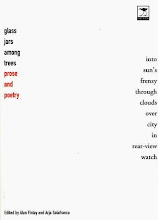
Alan Finlay founded and edited the literary publications Bleksem (1994) and donga (with Paul Wessels, 2000), and also edited New Coin poetry journal (ISEA) for four years from Dec. 2003 - Dec. 2007. In 2003 he co-edited glass jars among trees (Jacana) with Arja Salafranca. His poems have appeared in various journals locally and abroad, and short selections of his poetry have been published by Dye Hard Press (1994, 2002), Botsotso (1998), and online at Southern Rain Poetry (2009). A new collection of his poems is due out by Dye Hard Press in 2010.

Contact 011 615 7531 – The Bell Pepper, 176 Queen Street – Kensington

See link below for map
http://www.thebellpepper.co.za/map-to-the-bell-pepper

To take part in future readings and a series of planned literary salons in the coming months please mail Gillian or Arja at jozi.wordjam@gmail.com